ICAR-CMFRI documents complex Mating behaviour of Indian squid
Shedding light into complex reproductive system of the Indian squid (Uroteuthis duvaucelii), a new study by the ICAR-Central Marine Fisheries Research Institute (ICAR-CMFRI), Kochi has documented the first evidence of both heterosexual and homosexual mating behaviour of this commonly seen squid species in the Arabian Sea. The study uncovered fascinating and previously unknown aspects of this squid, including early mating, multiple copulations, and sperm storage.
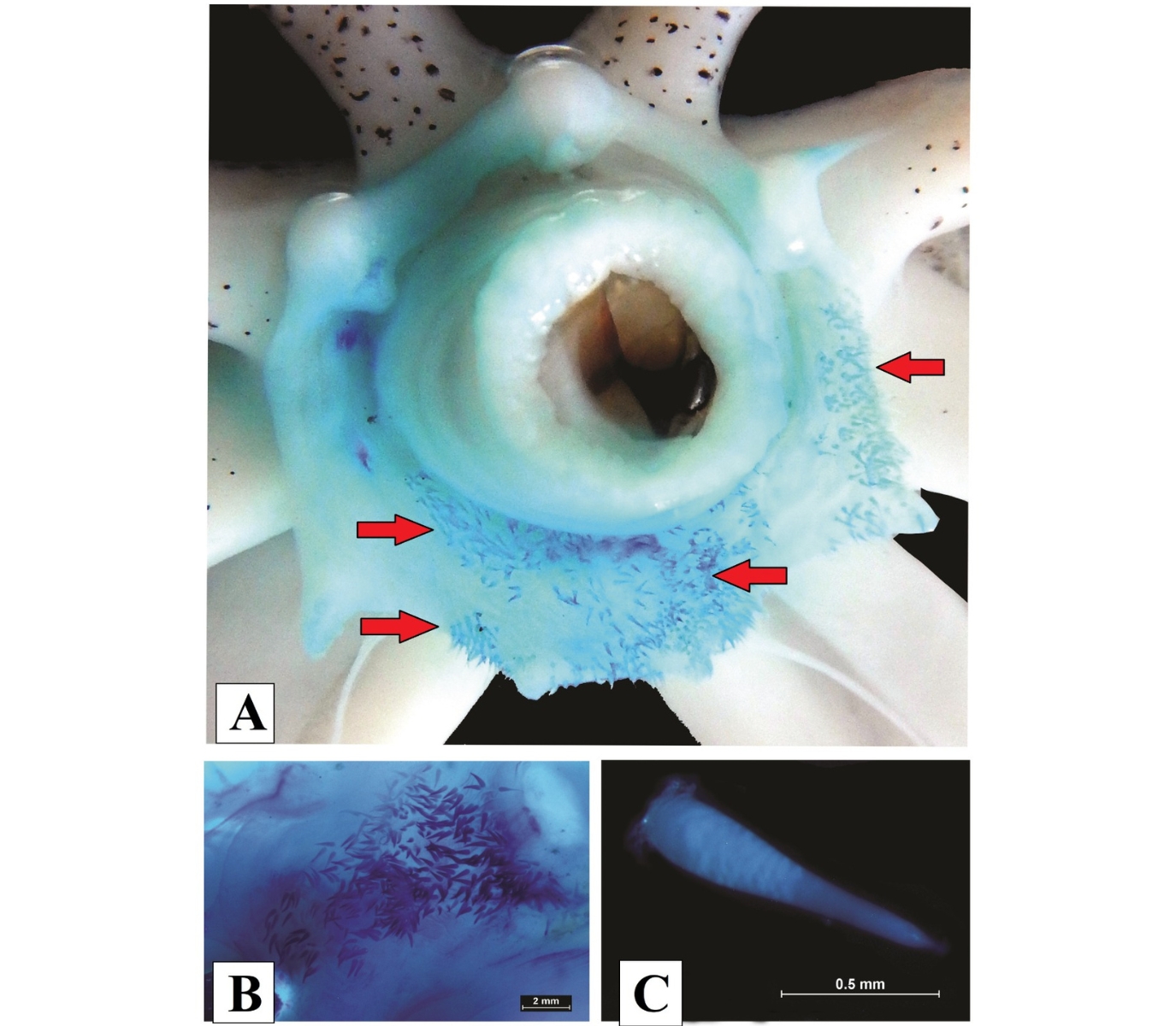
The study, led by Principal Scientist Dr Geetha Sasikumar and Dr K K Sajikumar, Technical Officer of the Shell Fish Fisheries Division, examined squid samples collected from the Arabian Sea off Kochi. Analysis of 232 female squids revealed that 40 percent had sperm carrying structures (spermatangia) attached to their buccal membranes, a fleshy area right around their mouth. This indicates active mating throughout the year with peak activity recorded in October. Researchers also found spermatangia implanted on the buccal membrane of a male squid, providing the first documented evidence of same-sex sexual behaviour of Indian squid.
Earlier, same-sex mating behaviour had been documented only in deep-sea squids outside Indian waters, where scientists believed the dark environment may have contributed to such behaviour. Similar behaviour has also been observed in dolphins. However, this is the first recorded instance in a coastal squid species.
The findings, published in the Journal of Natural History, shed new light on the reproductive biology of one of India’s most valuable squid resources.
The study also used statolith analysis to estimate the age of mated squids, finding that mating can begin as early as 98 days after hatching. Researchers found as many as 385 sperm packets attached around a single female squid’s mouth region, suggesting that females may mate multiple times with different males before laying eggs. According to researchers, this could be linked to dense spawning aggregations where random or opportunistic mating interactions may occur, leading to rapid growth of the squid species.
Researchers believe that understanding the mating system is essential for improving stock assessments and developing effective conservation and fisheries management strategies.